Subscribe

Monday, August 3, 2026

KMA Spotlight of the week

🏆 KMA Client Spotlight: SportyKore
Every successful platform starts with a vision—but it grows through strategy, consistency, and community.
This week, we're proud to spotlight SportyKore, a platform dedicated to bringing African football closer to fans, players, clubs, and local leagues.
At KMA – Kickstart Marketing Agency, we're excited to support SportyKore's growth by helping increase visibility, attract users, and build a stronger digital presence.
We believe African sports deserve innovative platforms, and we're proud to play a part in that journey.
🌐 www.growwithkma.com⁠�
Helping brands grow, one strategy at a time.

Sunday, August 2, 2026

The Best Time to Eat Dinner for Better Blood Pressure


When you eat your evening meal matters more than you know.

Eating dinner earlier in the evening can support healthy blood pressure.
An early meal aligns with the body’s internal clock and is linked with lower blood pressure.
Meal timing matters, but so does what you eat, limiting sodium and eating veggies.
You likely know the drill for keeping blood pressure in check, such as cutting back on sodium, being physically active and managing stress. Yet, there’s another factor you might be missing—and it has nothing to do with the food on your plate. It’s when you eat, specifically the timing of your dinner. 

A growing body of research in the emerging field of chrononutrition, the science of how meal timing syncs with our internal body clock, suggests that eating dinner earlier in the evening may be an underrated strategy for healthier blood pressure.


Michelle Routhenstein, M.S., RD, CDE, a cardiology dietitian, recommends finishing your dinner at least three hours before bedtime, ideally by 6 or 7 p.m. “This earlier timing supports your body’s circadian rhythm, allows you to process nutrients when your metabolism and insulin sensitivity are naturally higher and gives your heart and blood vessels time to fully ‘power down’ overnight, all of which can promote healthier blood pressure patterns,” she says. Here’s why an early dinner can help improve blood pressure. 

Supports Your Body’s Internal Clock
Your body runs on a natural internal clock called the circadian rhythm, and your cardiovascular system follows it closely. During healthy sleep, blood pressure typically dips 10% to 20% below daytime levels, a phenomenon cardiologists call nocturnal dipping.

When that nighttime drop doesn’t happen, a pattern known as nondipping, the risks add up quickly. Research has found that nondipping blood pressure patterns are independently associated with significantly higher risks of stroke and heart attack.

Late meals can interfere with this dip. Eating close to bedtime may prevent the cardiovascular system from fully winding down, keeping blood pressure elevated during hours when it should be at rest, says Routhenstein.

A review of studies examining meal timing in adults with elevated blood pressure found that later eating was significantly associated with higher blood pressure, even after accounting for diet quality, physical activity and sleep.
3

One of the largest studies on the impact of late dinners looked at more than 100,000 adults and found that eating dinner after 9 p.m. was associated with a significantly higher risk of cardiovascular disease compared to eating before 8 p.m. The effects were especially pronounced in women.
4
Improves Blood Flow & Insulin Response
Your body is more efficient at processing food, regulating blood sugar and maintaining healthy blood vessel function when you eat most of your food earlier in the day, says Routhenstein.

“When we switch that natural mechanism to eating more at night, it increases blood sugar and insulin levels overnight, which can cause fructose-induced hypertension,” she says. That happens when a big meal at night loads the body with fructose, which can interfere with nitric oxide. Less nitric oxide means stiffer, narrower vessels and higher pressure. 5
At the same time, elevated blood sugar and insulin levels after a big meal can signal to the kidneys to hold onto more sodium and raise blood pressure. Research has found that eating dinner at 6 p.m. versus 9 p.m., just a three-hour difference, significantly improved 24-hour blood glucose levels.6
Other Dinner Tips for Better Blood Pressure
“Dinner timing is an important part of the picture, but it is only one piece of the puzzle,” says Routhenstein.


“The biggest impact on blood pressure still comes from an overall heart-healthy lifestyle:  following a DASH- or Mediterranean-style eating pattern, limiting excess sodium, staying active, managing stress, maintaining a healthy weight and prioritizing quality sleep,” she adds. Studies suggest that a heart-healthy eating plan, like the DASH or Mediterranean diet, combined with time-restricted eating, including avoiding a late dinner, may have a synergistic effect on blood pressure.78

Penny M. Kris-Etherton, Ph.D., RDN, agrees. While there is some evidence that late-night eating may adversely affect cardiometabolic risk, she notes, the best advice for blood pressure control is to follow the updated nutrition guidance from the American Heart Association.9 “Just spreading calories throughout the day without paying attention to diet quality will not maximize the benefits of what can be achieved by focusing on current diet and lifestyle recommendations for heart health,” Kris-Etherton adds. 

Here are practical ways to put it all in a dinner 
  • Front-load your calories. Make breakfast and lunch your largest meals so dinner can be lighter. “Your body tends to handle food more efficiently earlier in the day, so try to make dinner satisfying but not your largest meal,” says Routhenstein.
  • Build your plate around plants. Vegetables, fruits, legumes and whole grains deliver fiber, essential nutrients and bioactive compounds that support heart health. “Include different colors, textures and types of produce,” says Kris-Etherton, “and remember even canned and frozen can be nutritious and affordable.”
  • Make potassium a priority. Enjoy more potassium-rich foods such as beans, sweet potatoes, leafy greens and avocado. “Potassium helps counterbalance the effects of sodium and supports healthy blood pressure regulation,” says Routhenstein.
  • Add more nitrate-rich vegetables. Karen Collins, M.S., RDN, recommends eating more spinach, kale, beets and celery, which are high in nitrates. Our body converts nitrates into nitric oxide, which dilate blood vessels and improve blood flow.
  • Watch the hidden sodium. The saltshaker is only part of the story. Highly processed foods, including flavored grain mixes, canned soups, sauces and packaged seasonings, are among the biggest contributors to excess sodium. A simple swap: Choose plain rice, couscous or other grains instead of flavored packets, and season with herbs, spices, citrus and garlic.
Our Expert Take
Eating dinner earlier is a strategy that works with your body’s biology rather than against it. Research suggests that shifting your evening meal to around 6 or 7 p.m., and finishing at least three hours before bedtime, may support the natural nighttime blood pressure dip that protects your heart while you sleep.Even so, timing is just one factor. The most meaningful impact on blood pressure comes from combining earlier dinners with a heart-healthy eating pattern, sodium reduction, regular movement, stress management and consistent sleep. The goal isn’t just rearranging when you eat, it’s building a full lifestyle that supports healthy blood pressure around the clock.

The fun and effective way to learn a language with AI!

Talkpal turns AI into your personal language coach - practice speaking, listening, writing, and pronunciation anytime, anywhere. https://surl.li/vfqmfm


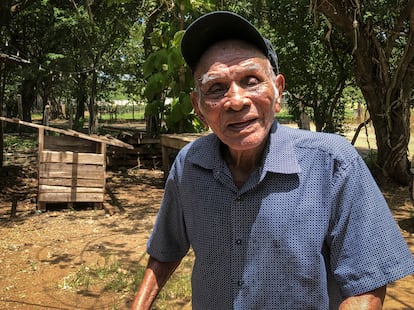
José Flores, the 119‑year‑old from Costa Rica that experts are trying to certify as the world’s oldest person.


The elderly man lives in poverty but in remarkably good health near a ‘Blue Zone’ that is rich in centenarians
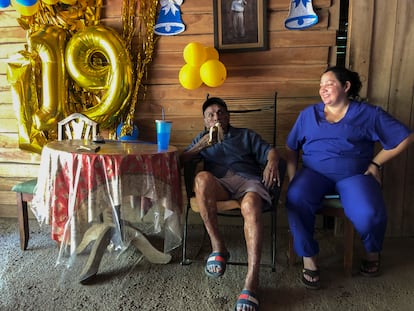
José Flores Flores celebrates his 119th birthday in Sardinal

Costa Rica’s Civil Registry says that on July 11, 1907—119 years ago—a woman named Josefa in the province of Guanacaste, on the country’s north Pacific coast, gave birth to a boy who was christened José Flores Flores. Everyone born in that first decade of the 20th century, and many who were born years later, are now deceased. But Mr. José still lives in good health in a rural municipality on the edge of a “blue zone,” a name given to regions with unusually high numbers of centenarians thanks to healthy living conditions.

What the official registry of the Central American country does not report is that Mr. José is strong, that he has a smile on his face and muscles on his arms, that he sleeps well and eats as well as can be expected in a poor, rural household where he is cared for by family. He is, without a doubt, the oldest person in Costa Rica and possibly in the entire world — a potential record that still depends on certifications being processed by relatives with the help of a local organization and a Spanish researcher who does not hesitate to call Flores “an absolutely extraordinary case.”

We found him in his wooden-and-sheet-metal house located on someone else’s estate in the small village of Obandito de Sardinal, in the hot municipality of Carrillo, near the Nicoya Peninsula. It is part of Guanacaste province, where he returned in 2024 nearly a century after leaving to work on banana plantations in the south of the country, when the region was far from being the destination for the thousands of foreign tourists who now arrive each year drawn by its beaches — and by the rural environment that partly explains the abundance of local long-lived people.

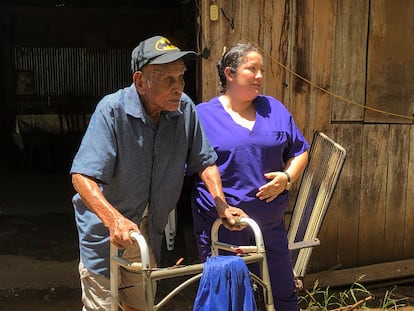
Con toda la pata (doing great),” Flores replies to the greeting as he rests seated next to some balloons left over from a recent birthday party, after a breakfast of gallo pinto (rice and beans), fresh cheese and slices of fried plantain. Beside the table where he sometimes plays dominoes or cards, he greets visitors with a strong handshake and a slow but genuine smile. He is now famous in the village and beyond; his dark face appears in local media wearing the Batman cap that belonged to a son who has since died. He has trouble hearing and suffers from knee wear; he says he feels “worn and blunt,” comparing himself to a dull machete. He uses a walker to go outside and feel the breeze, listen to the parrots in the trees and greet neighbors, accompanied by his granddaughter Hellen Flores, who divides her time between caring for her grandfather and attending courses for eldercare because she has discovered a calling and a possible employment opportunity.

“Many people see grandparents as furniture; they feed them and clean them, but they are not always seen as people with full rights. Here, [José] has the final say over his belongings,” says the granddaughter, who decided to take charge of his care despite not having a fixed income. The family receives only about 150,000 colones a month (about $330), one‑eighth of the average household income in the country. Poverty has accompanied José since he was born in another Guanacaste municipality, where his grandmother raised him after he was abandoned by his mother and lost his father at age seven.

As a child he learned to work in the fields and, barely a teenager, migrated to earn his own money in the banana enclaves in the south of the country, in exchange for brutal workdays in conditions that no one would associate with a long, pleasant or healthy life, except for the advantages of daily physical exercise. Later, married with children, he moved to the country’s north, without ever having the wages to buy his own land. At one point the State was going to allocate him a plot, but he was almost 75 and did not qualify because no one believed he would be able to work it, his granddaughter recalls with a laugh. Now they live in precarious conditions despite various promises of decent housing never being fulfilled, but José always knew how to endure hardship.

“Work a lot, entrust yourself to God and eat healthy.” That is the key José gives. His wife, Ofelia, died at 71. “I can say he reflects that functional lifestyle of the region: family and community networks, organic food, constant physical activity and the calm of a simple life, a routine marked by sunlight, a spirituality tied to religion… it’s a mix of many things,” says Jorge Vindas, founder of the Península de Nicoya Blue Zone Association. This group promotes and protects this part of Guanacaste as a region with a high presence of centenarians, as recorded 20 years ago by U.S. researcher Dan Buettner when he launched an international project that also includes Loma Linda in California, Sardinia in Italy, Ikaria in Greece and the Japanese island of Okinawa. Singapore has recently been added, as a result of large government investments that neither Mr. José nor his granddaughter can possibly imagine.

Flores, however, is not a “product” of Guanacaste’s blue zone. Vindas jokes that “he just left for a century and came back.” The truth is he largely shared the province’s lifestyle, which is now undergoing deep changes accelerated by the tourism industry and an influx of new residents who are altering the environment and influencing locals’ habits. Almost two million travelers arrived directly at Guanacaste Airport in 2025; English-language signs line the roads offering services and properties. Tourism and property developments are displacing vast estates and agricultural plots. Very little remains of the subsistence economy that allowed certain generations to eat without consuming any processed foods, another health factor that specialists often emphasize.

“There are many ingredients in this salad called longevity. Genetics, diet, physical activity… now we have added human relationships and social connection. But there is no definitive answer that explains everything, because other people in similar conditions have died at much younger ages,” says José Antonio Rabadán, PhD in Gerontology from the University of Alicante in Spain and a researcher of the Guanacaste region in Costa Rica, where he has made more than 70 visits to centenarians.

Rabadán met Flores when the latter turned 117 and was impressed by his physical condition. “At 119 years there is no normal. These are cases we are only beginning to understand,” the researcher says of the man who at 113 still walked a kilometer every day to meet other older adults at a daytime center in the town where he then lived. Rabadán is optimistic about obtaining international certification for José. This is because the state registry is reliable, and he also has a copy of the baptismal record signed by Bishop Luis Leipod in 1907.

“There is a very complete file that, to us, gives every credibility to José’s life, with official and verified documents,” adds Rabadán, who is confident of a favorable response from the validating body, the Gerontology Research Group (GRG), a global organization founded in the United States that registers and studies supercentenarians, people older than 110. After that he might become a Guinness World Record holder, but he warns he prefers to take it step by step. So far the oldest living person is the Englishwoman Ethel Caterham, who will turn 117 on August 21, according to GRC data. As far as is known, the record is held by the Frenchwoman Jeanne Calment, who reached 122 years and 164 days and died in 1997.

Rabadán and Vindas know Flores is exceptional as an individual, but he is also part of specific Guanacaste generations with longevity advantages that are disappearing in newer cohorts, as noted since 2023 by the respected demographer Luis Rosero‑Bixby, founder of the Central American Population Center (CCP) at the public University of Costa Rica (UCR). The specialist warned, however, that those born before the 1930s still show exceptionally high longevity in this region of the country, which in any case has a higher life expectancy at birth than the international average (83.7 years for women and 78.6 years for men, according to official figures).

These high ages combine, however, with a national trend of declining fertility to just 1.1 children per woman, which accelerates population aging and strains the economy, the state welfare model and pension systems. The granddaughter Hellen, for example, has only one child, who helps her care for his great‑grandfather. “A nursing home? Over my dead body. Here we care for him between my mother, my son and me; this is his home and this is his family,” the woman adds as José smiles without taking his eyes off the television set, where he enjoys watching the 1960s U.S. series Bonanza. He says he enjoys arm sports and squares up to try a strength test with his left arm, his stronger one.

Ghanaians, Zimbabweans among 127 foreigners arrested as South Africa Home Affairs set to deport illegal immigrants. #BBCpidgin


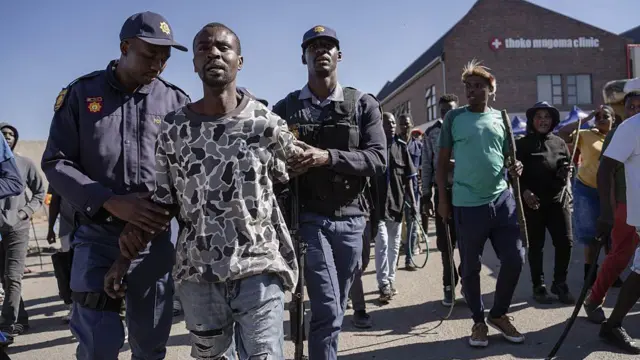
South Africa police hold man

Wia dis foto come from,Ihsaan Haffejee/Anadolu via Getty Images

South Africa police say dem don arrest about 127 foreign nations wey no dey documented for di kontri.

Dis na part of di new operation wey di South Africa police carry out as part of dia efforts to curb illegal immigration.

For different operations across di kontri, di police and di South Africa Department of Home Affairs announce arrest of undocumented foreign nationals wey dey live for different parts of di kontri.

According to South Africa Minister of Home Affairs, Leon Schreiber, e say di dozens of illegal immigrants wey dem arrest go chop deportation wey dey according to law.

Dis no be di first time wey di Home Affairs go announce di arrest of foreign nationals for di kontri.

South Africa police and Home Affairs collabo to dey carry out di raid of illegal foreign nationals for kontri.

Meanwhile, di South African govment say dem dey work hard to make sure say dia citizens wey engage for unlawful anti-immigration activities face justice.

South Africa President Cyril Ramaphosa bin react again during di week to di rising anti-migrants violence for di kontri as e clear say nobody get di right to make migrants scapegoats for unemployment, crime or shortcomings for di delivery of public services.

Nigeria and Ghana dey put pressure ontop African Union (AU) to take stand ontop di attacks on national foreigners wey dey shelle for South Africa.

Dis new arrests across South Africa by security agencies na to address wetin di kontri describe as illegal migration of foreign nationals as South Africans also accuse di foreigners of taking dia jobs.

'Dozens arrested for lawful deportation' - Minister

According to South Africa Home Affairs minister, e say dem conduct operation for di streets of Pretoria wey lead to di arrest of di illegal immigrants.

"Operation New Broom hit di streets of Pretoria yesterday, wia dozens of illegal immigrants dey arrested for lawful deportation."

Di minister say di Home Affairs no go gree for illegal immigrants, as im department gop kontinue dey work to 'restore di rule of law' as e dey for South Africa constitution.

Di police statement wey dem release on on Friday evening show say dem don gbab about 24 foreign nationals wey dem tag as undocumented.

South Africa police say dis particular operation prosper wey dem carry out on Wednesday 29 July, for Stilfontein, one part of di kontri, target illegal mining activities.

"Intelligence-driven Operation Prosper, targeting illegal mining activities for Stilfontein result in di arrest of 24 undocumented foreign nationals and one suspect for bribery."

According to di police, dem carry out di operation sake of di information and intelligence wey dem receive say illegal mining activities dey go on for di area.

Dem say di suspects dey allegedly 'extract gold-bearing material and dey transport am to illegal melting facilities.'

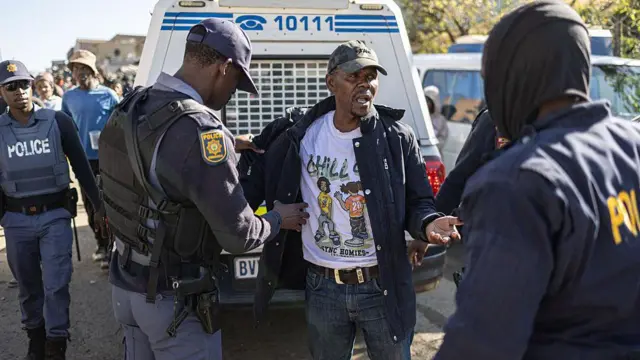
Police hold man wey wear cap

Wia dis foto come from,EMMANUEL CROSET / AFP via Getty Images

Ghanaians, Zimbabweans among arrested 127 foreign nationals for South Africa

Di South African Police for Limpopo say dem carry out operation for five districts for di province wia dem gbab 127 foreign nationals wey no dey documented.

Dem say di operation include 'stop-and-searches, roadblocks, compliance inspections and verification of undocumented foreign nationals.

Citizens of Ghana, Zimbabwe and Ethiopia dey among di foreigners wey di police gbab as dem accuse dem say dem go against di Immigration Act.

"Di integrated operation result in di repatriation of 115 undocumented Zimbabwean nationals. Twelve undocumented foreign nationals, nine Ethiopians and three Ghanaians, chop arrest for going against di Immigration Act."

Di police also say dem arrest three employers wey also allegedly employ undocumented foreign nationals.

Di operation wey dem carry out na in collaboration wit oda law enforcement agencies as dem also arrest suspects wey also dey wanted bifor for different offences.

Meanwhile, for mid-July, South Africa bin arrest ova 1,200 suspects including 159 undocumented foreign nationals wey dem say go against di immigration act.

South Africa police say dem pack di undocumented foreign nationals for Gauteng province of South Africa during dia operation shanela.

Di arrest dey come weeks afta di rainbow kontri carry out one of dia biggest crackdowns on undocumented migrants in years, following weeks of anti-immigration protests wey see violence, intimidation and looting.